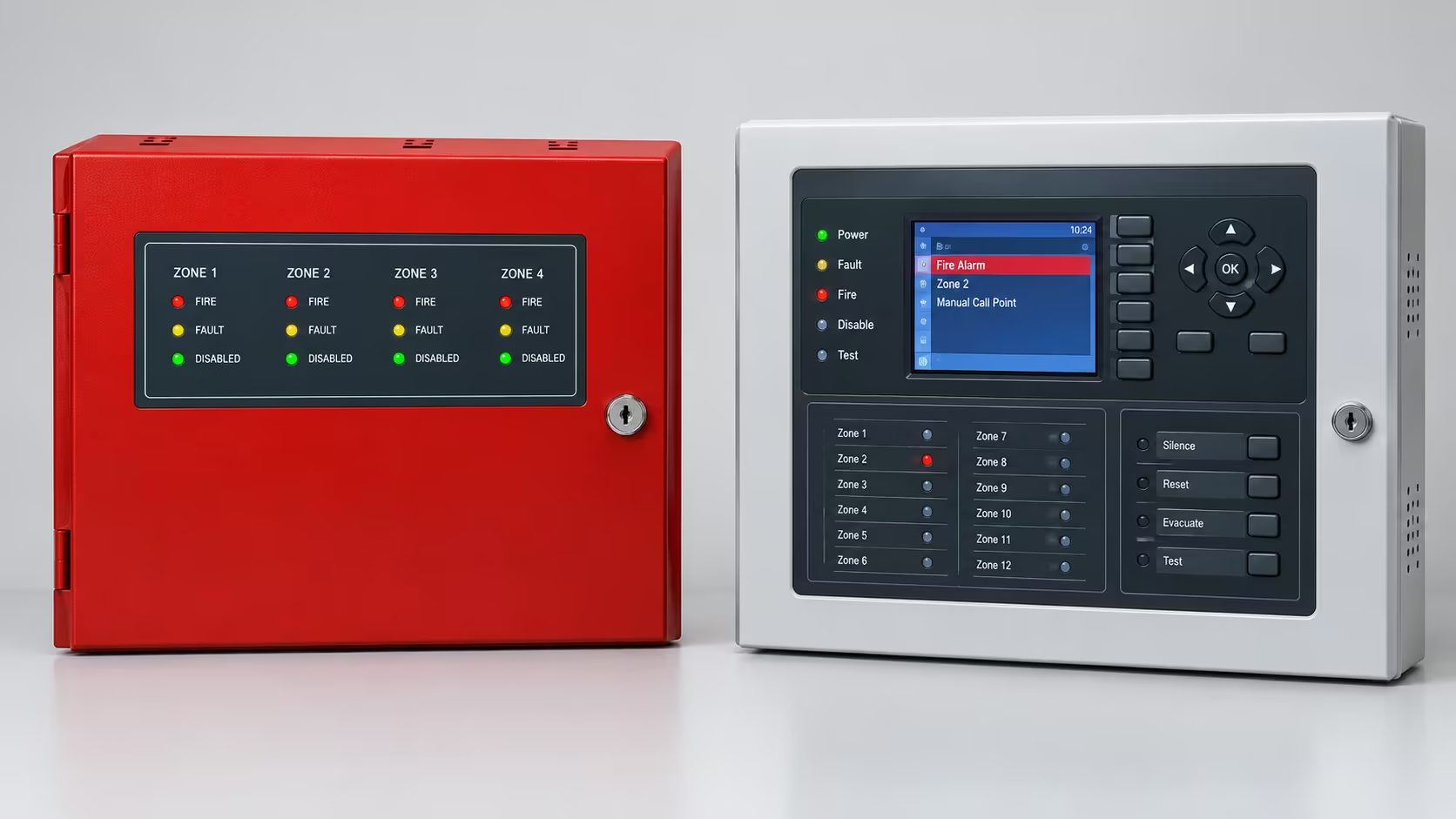
Understanding Fire Alarm Panels
A fire alarm panel is the control center of any fire detection system. It receives signals from detectors and other devices, processes them, and triggers alarms to alert people in the building. The panel also helps identify where a fire or fault may be occurring.
Choosing between a conventional and addressable fire alarm panel is one of the most important decisions when designing a fire alarm system. The right choice depends on building size, budget, and fire safety requirements under Punjab’s fire safety regulations.
What is a Conventional Fire Alarm Panel
A conventional fire alarm panel divides the building into zones. Each zone has a group of detectors and manual call points connected on the same circuit. When any device in a zone activates, the panel shows which zone has the alarm but not which specific device caused it.
Conventional systems are simpler in design and have been used for many years. They are easier to understand and are often used in smaller buildings with straightforward layouts.
What is an Addressable Fire Alarm Panel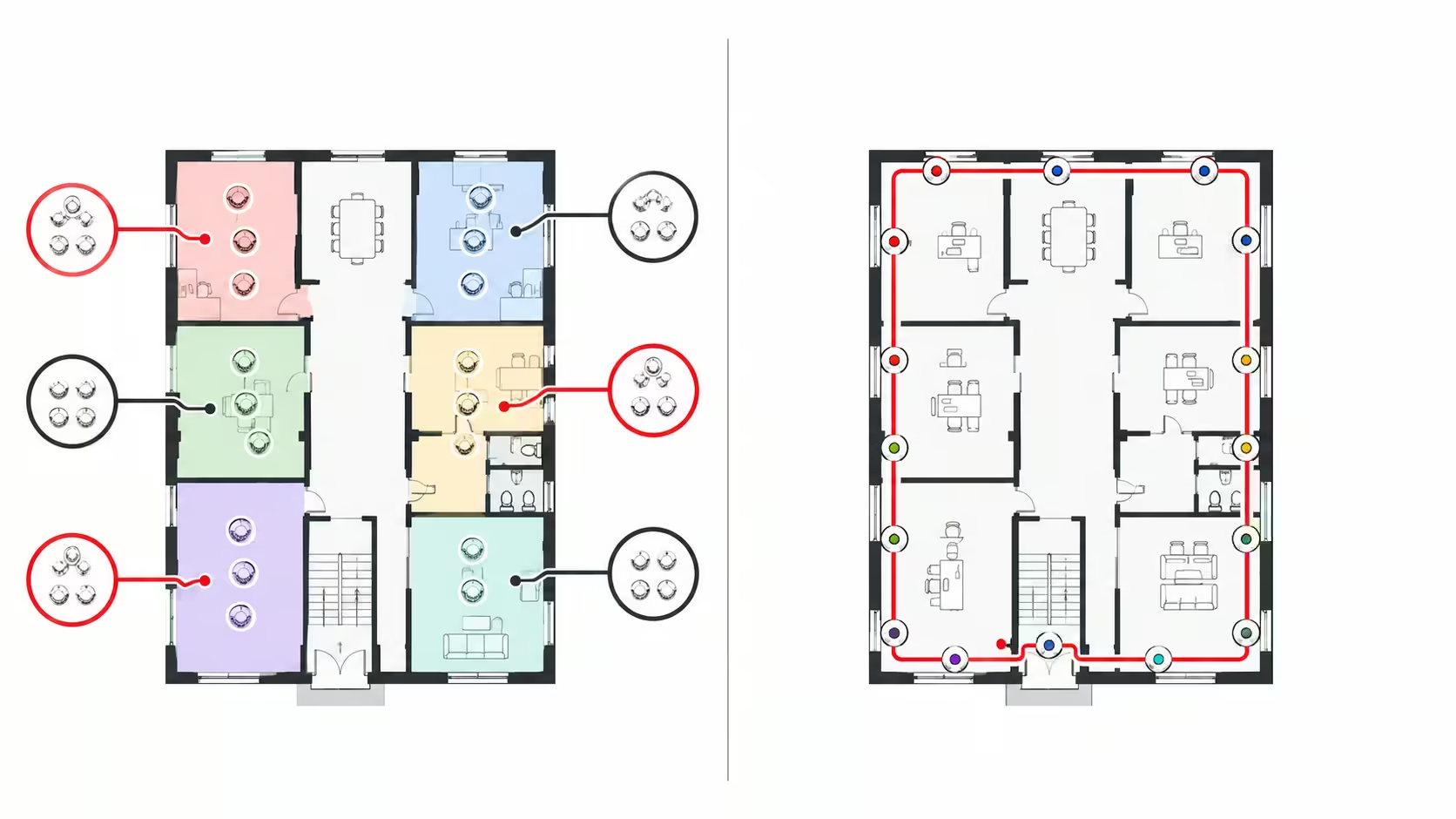
An addressable fire alarm panel gives each device its own unique address. Every smoke detector, heat detector, manual call point, and module has an individual identity on the system. When a device activates, the panel shows the exact location of that device by name or address.
Addressable systems are more intelligent and provide detailed information. They are common in larger buildings, high-rises, and complex structures where quick location of a fire is critical.
Key Differences Between Conventional and Addressable
Identification: Conventional shows zone level only. Addressable shows exact device location.
Wiring: Conventional uses simpler zoning with more devices per circuit. Addressable uses a loop wiring system where devices are connected in a loop, using less wiring in many large installations.
Cost: Conventional systems have lower upfront costs for equipment and are cheaper for small buildings. Addressable systems cost more initially but can save costs in larger buildings due to less wiring and easier fault finding.
Scalability: Conventional systems are limited in size and adding more zones becomes complicated. Addressable systems are highly scalable and can support hundreds of devices on one system.
Fault finding: With conventional systems, finding a fault means checking the entire zone. With addressable systems, the panel shows exactly which device has a fault, making troubleshooting much faster.
Flexibility: Addressable systems allow for programming options like cause and effect, device sensitivity adjustment, and integration with other building systems. Conventional systems have very limited programming options.
False alarm management: Addressable panels can often adjust detector sensitivity based on time or conditions, and can help investigate false alarms more easily. Conventional systems have less control.
Which One is Better for Different Buildings
Small Shops and Offices
For small retail shops, single-floor offices, or small buildings, a conventional fire alarm panel is often sufficient and more cost-effective. These buildings have simple layouts and zoning is easy to manage.
Medium-Sized Buildings
For buildings with multiple floors and departments like small hospitals, schools, or commercial plazas, the choice depends on budget. Addressable systems become more attractive here as locating a fire quickly becomes more important.
Large Buildings and High-Rises
For high-rise buildings, large factories, hotels, and shopping malls, addressable fire alarm panels are almost always the better choice. The ability to pinpoint exact locations saves valuable time during emergencies and helps with evacuation planning.
Buildings with Complex Requirements
If the building needs integration with fire suppression systems, access control, elevators, or HVAC shutdown, addressable systems are far more capable of handling these requirements.
Compliance with Punjab Fire Safety Regulations
Punjab’s new fire safety regulations require appropriate fire detection and alarm systems based on building type, size, and occupancy. For larger commercial buildings, high-rises, and certain occupancies, addressable systems are often expected or preferred.
Civil Defence and Rescue 1122 inspect fire alarm systems during NOC checks. Having a properly designed and installed system that meets current requirements is essential for compliance.
Installation Considerations
Conventional systems are easier to install and maintain for those with basic fire alarm knowledge. Addressable systems require more skilled technicians for design, programming, and commissioning.
Both systems need proper design by qualified fire safety professionals. Wrong design can lead to non-compliance regardless of which system you choose.
Long-Term Value
While addressable systems cost more upfront, they offer better long-term value for larger buildings. Easier maintenance, faster fault finding, and better control reduce ongoing costs. For small buildings, conventional systems provide adequate protection at lower cost.
Conclusion
Neither system is universally better. For small, simple buildings, a conventional fire alarm panel is practical and affordable. For larger, complex buildings where rapid response and precise location matter, an addressable fire alarm panel is the better choice.
The key is to choose based on your building’s needs and ensure the system meets Punjab’s fire safety requirements. Always work with certified fire safety companies for proper design and installation.
Free Site Survey ke liye call karein: 0305-9676306
FAQs
1. What is the main difference between conventional and addressable fire alarm panels?
Conventional panels show which zone has an alarm while addressable panels show the exact device location that triggered the alarm.
2. Which is cheaper, conventional or addressable?
Conventional fire alarm panels are cheaper upfront, especially for small buildings. Addressable panels cost more initially but may be more cost-effective for larger buildings.
3. Is an addressable fire alarm system required in Punjab?
It depends on building type, size, and use. Large buildings and high-rises often require addressable systems, while smaller buildings may be fine with conventional systems. Check current Punjab regulations for your building.
4. Can I upgrade from conventional to addressable later?
It is possible but usually expensive as it often requires rewiring or significant changes. It is better to plan for future needs during initial installation.
5. Which system is easier to maintain?
Addressable systems are easier to maintain as faults and alarms are shown with exact locations. Finding issues in conventional systems takes more time as you have to check entire zones.
6. How many devices can each system support?
Conventional systems are limited by number of zones and devices per zone. Addressable systems can support hundreds or thousands of devices depending on the panel.
7. Do both systems meet fire safety codes in Pakistan?
Yes, both can meet requirements if properly designed and installed. The choice must match the building’s requirements as per applicable fire safety standards and Punjab regulations.
8. Which system gives faster response?
Addressable systems allow faster response as firefighters or staff know exactly where the alarm came from without searching the whole zone.