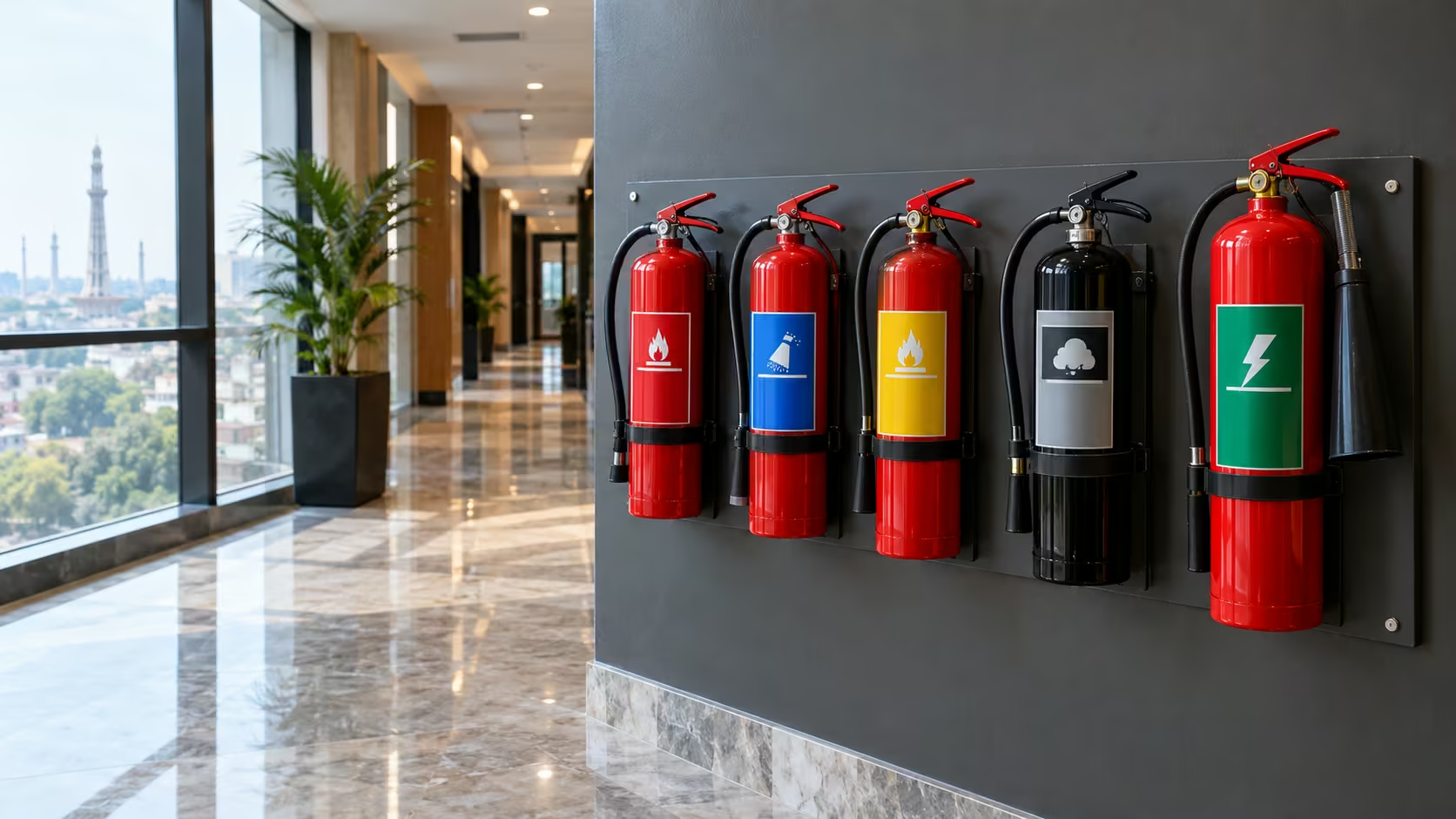
Understanding the Need for the Right Fire Extinguisher
Fires can start in any building without warning. The type of fire that can occur depends on what is burning. Using the wrong fire extinguisher on a fire can make the situation worse and put lives at greater risk. This is why knowing which fire extinguisher to use for which fire class is not just helpful but necessary for safety compliance in Pakistan.
Many businesses in Lahore and across Punjab are now required to meet stricter fire safety rules under the new Punjab fire safety regulations. Choosing the correct fire extinguisher is one of the first steps towards meeting these requirements. The key is to match the extinguishing agent to the fuel source of the fire.
The Five Main Fire Classes and Their Extinguishers
Fire Class A: Fires Involving Ordinary Combustibles
Class A fires involve solid materials like wood, paper, cloth, cardboard, and plastics. These are the most common types of fires in homes, offices, and schools.
Water extinguishers are often used for Class A fires as water cools the burning material below its ignition temperature. However, water must never be used on electrical fires or fires involving flammable liquids.
ABC dry powder extinguishers can also handle Class A fires along with other classes, making them a versatile option for general use in many buildings.
Fire Class B: Fires Involving Flammable Liquids
Class B fires involve flammable liquids such as petrol, diesel, kerosene, paint, and solvents. These fires spread quickly and can be very dangerous if not handled correctly.
Foam extinguishers work well on Class B fires by forming a blanket over the liquid surface, cutting off oxygen supply and preventing re-ignition.
CO2 extinguishers are also suitable for some Class B fires, especially where electrical equipment is nearby as CO2 leaves no residue.
ABC dry powder extinguishers provide good coverage for Class B fires as well, though they can create a cloud that reduces visibility.
Fire Class C: Fires Involving Flammable Gases
Class C fires involve flammable gases like LPG, natural gas, and propane. The priority for these fires is usually to shut off the gas supply if it is safe to do so.
ABC dry powder extinguishers are commonly used for Class C fires as they can interrupt the chemical reaction. Water, foam, and CO2 extinguishers are not suitable for gas fires as they do not effectively control the burning gas.
Fire Class D: Fires Involving Combustible Metals
Class D fires involve metals like magnesium, aluminium, sodium, and potassium. These are rare in most commercial buildings but can occur in laboratories or metal workshops.
Special dry powder extinguishers designed specifically for metal fires are required here. Standard ABC, CO2, foam, or water extinguishers are not safe for Class D fires.
Fire Class F: Fires Involving Cooking Oils and Fats
Class F fires involve cooking oils and fats, typically found in commercial kitchens and restaurants. These fires burn at very high temperatures and can re-ignite easily.
Wet chemical extinguishers are specifically designed for Class F fires. They create a soapy layer over the hot oil that cools it and prevents re-ignition. Water must never be used on cooking oil fires as it can cause a dangerous fireball.
Choosing the Right Extinguisher for Different Locations
Offices and Schools
For most offices and schools, the main risks are Class A fires from paper and furniture. An ABC dry powder extinguisher is often the most practical choice as it covers Class A, B, and C fires. Smoke detectors should also be installed alongside extinguishers for early detection.
Factories and Workshops
Factories may have a mix of risks including flammable liquids, electrical equipment, and combustible materials. Depending on the specific hazards, a combination of ABC dry powder and CO2 extinguishers may be needed. Areas with flammable liquids may require foam extinguishers as well.
Restaurants and Commercial Kitchens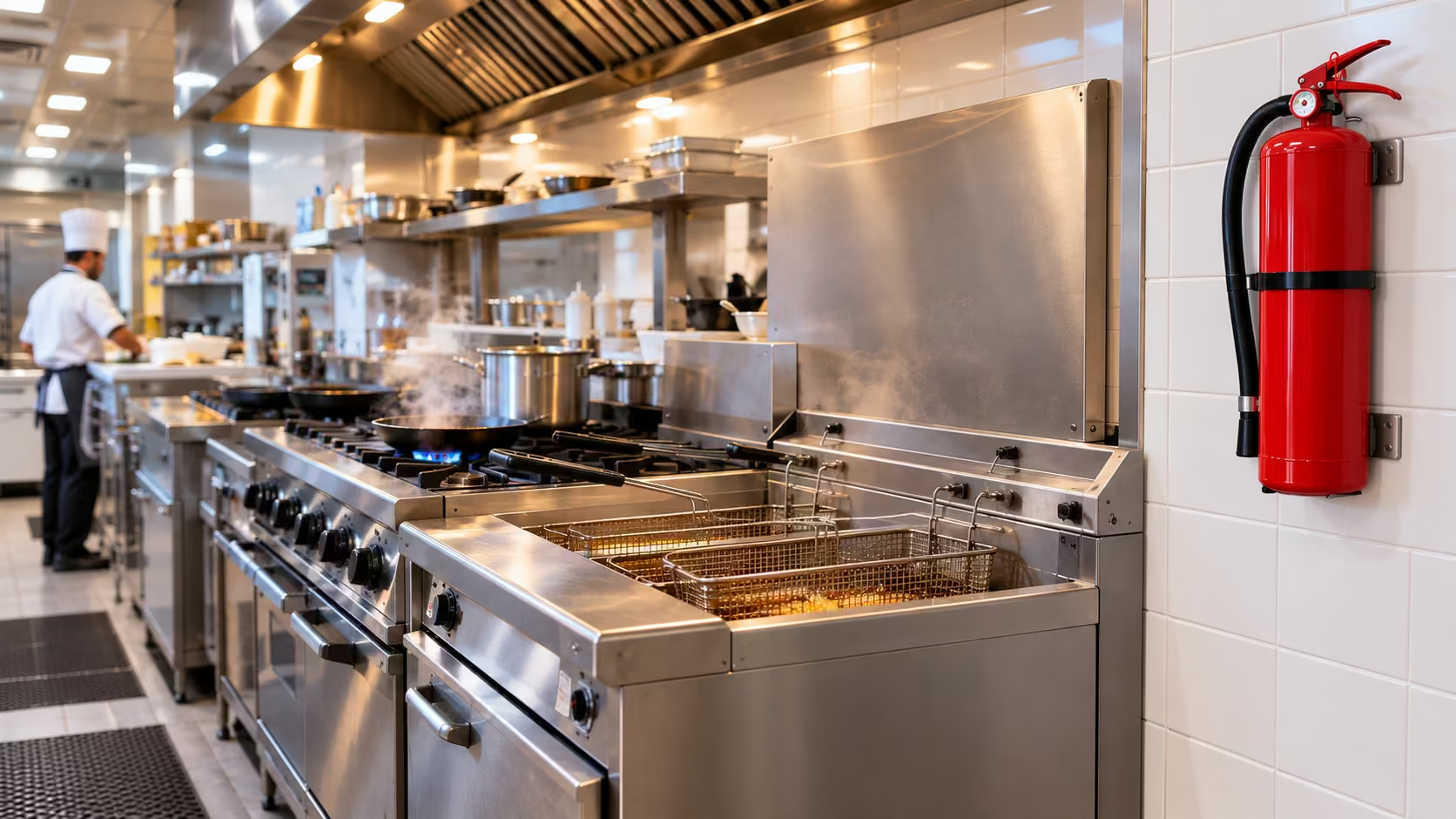
Commercial kitchens have a high risk of Class F fires. Wet chemical extinguishers must be installed near cooking areas. Additionally, kitchens should have proper kitchen fire suppression systems for larger cooking equipment. CO2 extinguishers can be used near electrical panels but never on deep fat fryers.
Garages and Fuel Storage Areas
Garages dealing with petrol, diesel, or paint have Class B fire risks. Foam extinguishers or ABC dry powder extinguishers are suitable here. Water extinguishers should never be placed in areas with flammable liquids.
Server Rooms and Data Centres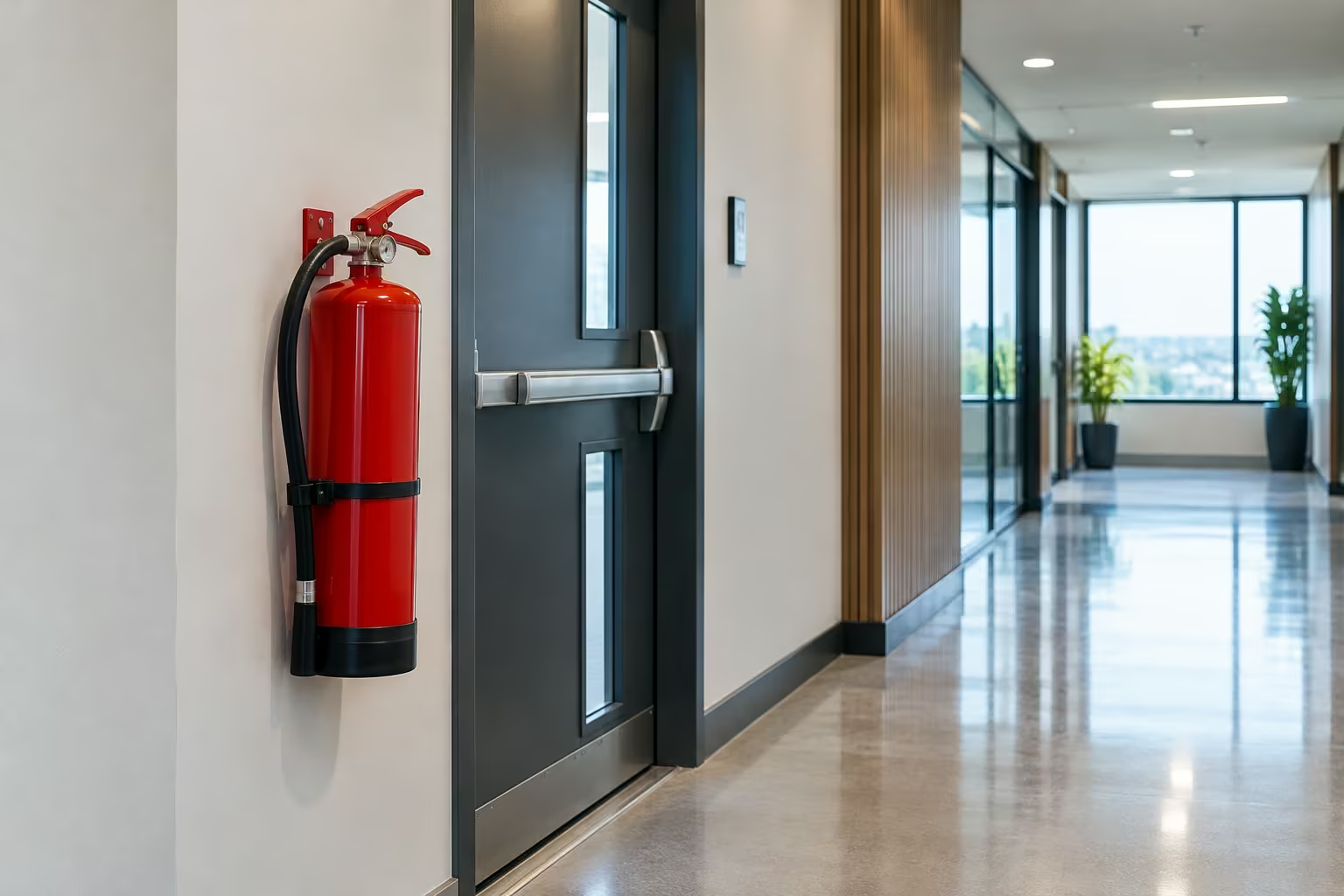
Server rooms have electrical fire risks with sensitive equipment. CO2 extinguishers are ideal for these areas as they leave no residue that could damage electronics. ABC powder can be used but may leave residue that requires clean-up.
Important Safety Considerations
Placement and Accessibility
Fire extinguishers must be placed in visible, easily accessible locations. They should be mounted near exits but not in a way that blocks escape routes. In Punjab, fire safety inspectors now check for proper placement during NOC inspections.
Maintenance and Inspection
A fire extinguisher is only useful if it works when needed. All extinguishers need regular inspection and servicing. Pressure gauges should be checked monthly. Professional servicing is required at least once per year. Refilling is needed after use or when the extinguisher is due for service.
Training Matters
Having the right extinguishers is only half the battle. People need to know how to use them. The PASS technique (Pull, Aim, Squeeze, Sweep) should be known by designated fire wardens and staff. Regular fire drills help ensure everyone knows what to do in case of a fire.
Meeting Compliance Requirements
With Punjab’s new fire safety regulations, businesses must ensure they have the correct types and numbers of fire extinguishers. During inspections by Rescue 1122 or Civil Defence, having the wrong type of extinguisher can result in warnings or even building seals for repeat violations.
For accurate requirements based on your building type and size, a proper fire safety audit is necessary. This ensures compliance while also providing real protection for your staff and property.
Conclusion
Knowing fire extinguisher types and their correct use can save lives and property. Water, foam, CO2, dry powder, and wet chemical extinguishers all serve different purposes. The key is matching the extinguisher to the fire class and location.
With Punjab tightening fire safety rules, now is the time to review your fire safety equipment. Make sure your extinguishers are of the correct type, properly maintained, and that your staff knows how to use them.
FAQs
1. Which fire extinguisher is best for general use in an office?
An ABC dry powder extinguisher is best for general office use as it covers Class A, B, and C fires which are the most common risks.
2. Can I use water on an electrical fire?
No, water should never be used on electrical fires as it conducts electricity and can cause electrocution. Use a CO2 extinguisher for electrical fires.
3. What extinguisher should be used in a commercial kitchen?
A wet chemical extinguisher is required for cooking oil and fat fires in commercial kitchens. These are specifically designed for Class F fires.
4. How often should fire extinguishers be serviced?
Fire extinguishers should be visually inspected monthly and professionally serviced at least once per year. They need refilling after use or when due for service.
5. What does ABC mean on a fire extinguisher?
ABC means the extinguisher can be used on Class A (ordinary combustibles), Class B (flammable liquids), and Class C (flammable gases) fires.
6. Can CO2 extinguishers be used on cooking oil fires?
No, CO2 extinguishers are not suitable for cooking oil fires. Wet chemical extinguishers must be used for Class F fires.
7. Is it legal to use any fire extinguisher in Punjab?
No, fire extinguishers must be appropriate for the fire risks in your building. Punjab’s new regulations require proper fire safety equipment as per building type and use.
8. What is the PASS technique for using a fire extinguisher?
PASS stands for Pull the pin, Aim at the base of the fire, Squeeze the handle, and Sweep from side to side at the base of the fire.